Microsoft’s Digital Crimes Unit (DCU), cybersecurity software company Fortra™ and Health Information Sharing and Analysis Center (Health-ISAC) are taking technical and legal action to disrupt cracked, legacy copies of Cobalt Strike and abused Microsoft software, which have been used by cybercriminals to distribute malware, including ransomware. This is a change in the way DCU has […]
Read More… from Stopping Cybercriminals From Abusing Security Tools
I blogged about the Cobalt Strike roadmap in March last year and while the fundamental tenets of our approach to R&D remain unaltered, a lot has changed behind the scenes over the past year or so. I try to engage with our customers on various platforms and over the past few months, I’ve been asked […]
Read More… from Cobalt Strike 2023 Roadmap and Strategy Update
This blog post accompanies a new addition to the Arsenal Kit – The User-Defined Reflective Loader Visual Studio (UDRL-VS). Over the past few months, we have received a lot of feedback from our users that whilst the flexibility of the UDRL is great, there is not enough information/example code to get the most out of […]
Read More… from Revisiting the User-Defined Reflective Loader Part 1: Simplifying Development
Cobalt Strike 4.8 is now available. This release sees support for system calls, options to specify payload guardrails, a new token store, and more. We had originally planned to get this release out late in 2022 but progress was stymied due to the 4.7.1 and 4.7.2 patch releases that we had to put out to […]
Read More… from Cobalt Strike 4.8: (System) Call Me Maybe
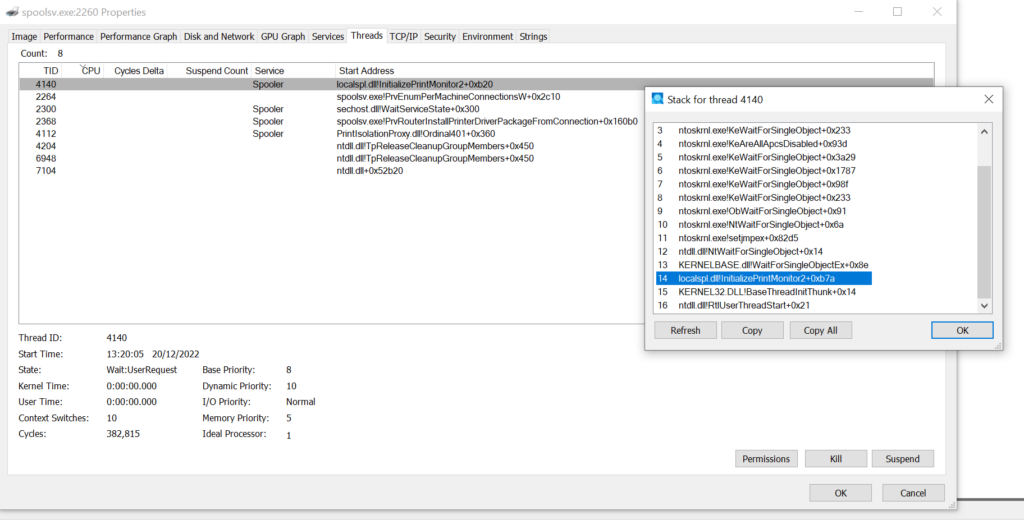
This blog introduces a PoC technique for spoofing call stacks using timers. Prior to our implant sleeping, we can queue up timers to overwrite its call stack with a fake one and then restore the original before resuming execution. Hence, in the same way we can mask memory belonging to our implant during sleep, we […]
Read More… from Behind the Mask: Spoofing Call Stacks Dynamically with Timers
Engineered by expert red teamers, Outflank Security Tooling (OST) delivers a curated suite of offensive capabilities capable of challenging even the most hardened enterprise environments. Leveraging advanced techniques in payload generation, obfuscation, and process injection, OST facilitates the simulation of full-scale attacks, spanning initial compromise through data exfiltration. Prioritizing Stealth and Evasion Quietly circumventing modern […]
Read More… from Outflank OST Datasheet
Cobalt Strike 4.7.2 is now available. This is an out of band update to fix a remote code execution vulnerability that is rooted in Java Swing but which can be exploited in Cobalt Strike. Remote Code Execution Vulnerability I’d like to start by giving credit to Rio Sherri (0x09AL) and Ruben Boonen (FuzzySec) from the […]
Read More… from Out Of Band Update: Cobalt Strike 4.7.2
Cobalt Strike 4.7.1 is now available. This is an out of band update to fix an issue discovered in the 4.7 release that was reported to be impacting users, and for which there was no workaround. We also took the opportunity to address a vulnerability that was reported shortly after the 4.7 release, along with […]
Read More… from Out Of Band Update: Cobalt Strike 4.7.1
Cobalt Strike 4.7 is now available. This release sees support for SOCKS5, new options to provide flexibility around how BOFs live in memory, updates to how Beacon sleeps and a number of other changes that have been requested by our users. We’ve also given the user interface a bit of a refresh (including support for […]
Read More… from Cobalt Strike 4.7: The 10th Anniversary Edition
A decade after its debut by founder Raphael Mudge, Cobalt Strike has become a favorite tool of cybersecurity experts in every industry for adversary simulation and Red Team engagements. With more members than ever, the Cobalt Strike team has expanded its efforts on research activities to further add features, enhance security, and fulfill customer requests. We’d like to […]
Read More… from Looking Back & Moving Forward: 10 Years of Cobalt Strike