As security budgets get cut across the board, hard decisions must be made about what stays and goes. Offensive security (also referred to as “proactive security”) is one of the most effective ways for organizations to audit their security defenses, protect their networks, and stay compliant.
Unfortunately, highly trained offensive security personnel are hard to come by. As the need for proactive security increases but the number of skilled professionals decreases, upskilling and reskilling are favored ways for organizations to scale their existing teams to meet demand. It all comes down to investing in your current staff and there are several benefits to doing this — for employer and employee.
The practice of upskilling and reskilling lets companies “hire” from within while giving employees the valuable training they need to be more indispensable in the workplace.
Upskilling and reskilling:
- Improve employee retention
- Create a growth environment for employees
- Are cost-effective ways to scale security teams,
among other benefits
Offensive security measures — vulnerability management, pen testing, and red teaming — are critical to ensuring that an organization’s security posture performs as needed when an adversary strikes. Giving current employees the chance to make a difference in the company through offensive security upskilling and reskilling is a wise, judicious use of resources at a time when resources are scarce.

What is Upskilling?
Upskilling teaches employees additional skills pertaining to their current role which would allow them to expand their present job capabilities and “do more.” Upskilling allows employees to build on their current skillsets and do more in their day. For example, a pen tester could get training to help perform occasional red team engagements as well, not only plumbing for known exploitable vulnerabilities but testing the infrastructure (and its defenses) with the latest adversarial tactics.
What is Reskilling?
Reskilling is teaching current employees new skills, in this case pertaining to cybersecurity, to enable them to make a career-switch to a more in-demand field. Not only does this save on new-hire overhead and leverage interdepartmental knowledge, but reskilling also improves the work culture and morale as employees are shown that their employers are willing to invest in them. This could be the case of an IT administrator becoming a penetration tester, providing the IT admin with a whole new skill set. This could also constitute a wider career change, such as an accountant or healthcare professional training for a new role as a threat analyst.
Setting the Stage for the Reskilling Revolution
It’s a story we all lived through but one that bears retelling. All organizations faced unprecedented digital change over the past ten years, with world events contributing to the accelerated pace. With every company now essentially a software company, a larger amount of software than ever needs to be protected. Factor in every line of code written, every new application, burgeoning APIs, and the complete disintegration of the perimeter — not to mention breakneck cloud adoption rates and stunning AI advancements — and we begin to see why the limited cybersecurity teams of five years ago are struggling to bear up under the weight of new technologies, multiple steep learning curves, and ever-advancing adversarial techniques.
As the industry continues to persevere through a cyber talent crisis that promises to go nowhere, companies that were hoping to pay a premium for new talent are being blocked again by cybersecurity funding cuts across government and the private sector. Even venture capital firms aren’t immune. This sets the stage for a looming question: How do organizations close the cyber talent gap? At a time when companies are being asked to make more bricks with less straw, creative and resourceful answers are in high demand.

The solution to train existing employees to do cybersecurity-related tasks resonates with a lot of strapped organizations. Observes Bill Reynolds, research director at Foote Partners, a workforce research firm, “With the significant shortfall in the marketplace for skilled cybersecurity professionals, the sense I’m getting by talking to hundreds of employers… is that they’re focusing more right now on training and developing talent from within.” Additionally, the World Economic Forum (WEF) suggests employers keep an open mind when it comes to hiring those with non-traditional cybersecurity skillsets and reskilling them. Notes the WEF, “It’s a pivotal time to find job seekers interested in learning new skills or changing careers… But with the growing talent shortage, this recruiting approach must also be expanded to consider new talent pools and diverse expertise to help organizations fill unfilled positions.”
The Benefits of Reskilling in Cybersecurity
As noted in CSO, “While the tendency is to seek out existing experts with technology-focused certifications or cyber related degrees… an upskilling and reskilling strategy provides only an upside as organizations try to fill the cyber skills gap and keep their networks safe.” Here are some of those upsides:
Benefits to the Employer
Benefits to the Employee
As Steve Morgan, founder of Cybersecurity Ventures, notes, “Every IT position is also a cybersecurity position now… Every IT worker, every technology worker, is (or should be) involved at some level with protecting and defending apps, data, devices, infrastructure, and people.”
A Simple Guide to Successful Red Teaming
This guide breaks down the fundamentals of red teaming, explaining how realistic adversary simulations help organizations uncover weaknesses, test defenses, and improve overall security. It provides a clear overview for teams looking to better understand and apply red teaming practices.
How to Begin Your Upskilling/Reskilling Journey
Both upskilling and reskilling are poised to be instrumental in helping SOCs survive the demands of an unprecedented threat landscape, job market, and technological economy. Here’s how to begin your journey with a few simple steps.
Strategic Upskilling and Reskilling
Proactive Security Focus
It’s good to trust. But it’s better to verify.
Without the proper skills onboard, you’ll never be able to fully do either. That’s why upskilling and reskilling are so imperative in a proactive security space. These are skills that not every company typically has on-hand. A handful of cyber-mature organizations run their own robust offensive security programs in-house, but those without similar means may lack the ability to verify defenses at a time when security budget cuts make current defense capabilities matter the most.
At this point, you’ve invested in your security strategy, but have you verified its effectiveness? A great deal depends on how your unique infrastructure is set up, and how your tools and software are configured. What you think might be deployed properly, patched correctly, or integrated securely might actually not be. And you don’t want an attacker to be the one who finds that out. Enter proactive (or offensive) security: the triumvirate of vulnerability management, penetration testing, and red team engagements.
- Vulnerability Management — Tests for known vulnerabilities (CVEs) within your network and prioritizes them using risk context. Also comprises a patch management program to stay ahead of discovered weaknesses.
- Penetration Testing — Tries to exploit the discovered vulnerabilities to see if they can be compromised.
- Red Teaming — Assesses your defenses and incident response abilities (in both your technology solutions and SOC) by leveraging the same advanced tactics as today’s cyber adversaries.
Operating on an offensive security level is just that. A threat actor can’t hit you where you’re weakest if your pen testers just identified that security last week and your team already repaired the damage. A cybercriminal can’t sneak up on vulnerabilities you’re aware of and have patched, and nation-state actors can’t throw your team off its balance with advanced tactics they met last month in a red team engagement. Strong offensive security techniques clearly give your organization the upper hand. What happens if you don’t? You already know what’s at stake. Besides giving an obvious tactical advantage to cybercriminals, failing to prove your defenses before you trust them (and your reputation, career, and bottom line to them) can result in disasters like:
It’s important to remember that proactive security doesn’t just prevent breaches; it also minimizes damage by implementing safeguards so that a single entry point doesn’t allow an attacker full access to critical assets. At all steps of the way, offensive security techniques discover ways to prevent attacks and mitigate fallout.
Best Practices
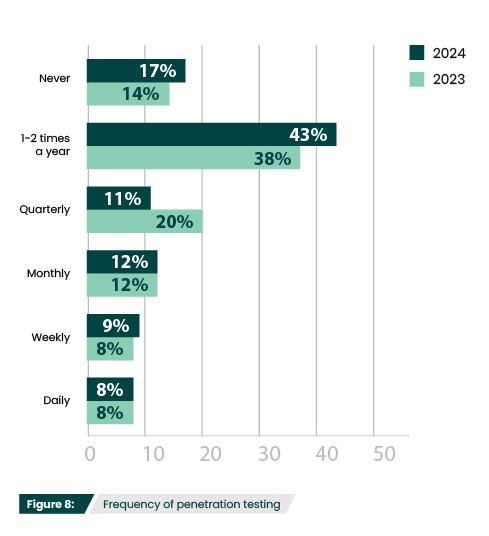
Our 2024 Penetration Testing Report revealed that “83% of respondents still prioritize running at least one to two pen tests a year in order to prioritize risks, close security gaps, and stay compliant with important security regulations.” Not surprisingly, they work. Per the same report, 72% of respondents reported that “penetration testing has prevented a breach at their organization.” The difficulty then seems to be means, not motivation.
The cybersecurity industry is at a stage where budgets are increasingly tight. Although the demand for qualified cybersecurity experts remains high (the cyber talent crisis still threatens to reach85 million workers by 2030), difficult decisions are having to be made now that funding is being cut for cybersecurity programs around the globe (and at every level). Consequently, companies are looking for ways to re-work the resources they already have. Perhaps, to find something they didn’t see there before.
As they do so, it is important to run each security service through a cost/benefit analysis. We’ll skip the detailed figures, but there is a definite opportunity cost to not engaging in a strong offensive security program. In our blog, “Weighing the Risk: The Cost of Skipping Pen Tests,” we note that “When an organization is blind to its weak spots, it is at risk of being surprised by attackers and thrown into the limelight unprepared.”
Additionally, while we can admit there is some cost to reskilling IT admins to be pen testers, “all good things come with a price. But the truth is that when stacked against the million-dollar threats of today’s data breaches, an increasing number of multi-million-dollar compliance fines, and unenumerated reputational damages, the price is the lowest possible cost of staying safe.”
User-Friendly Offensive Security Tools
When focusing on re-purposing your current workforce, one thing you don’t want to worry about is repurposing a complex security stack, too. The right offensive tools can make all the difference in streamlining your training and getting results quickly.
- Fortra’s Core Impact (Penetration Testing) — Fortra’s Core Impact is designed so that even junior administrators can run professional penetration tests using the same types of attacks found in the real world. With the ability to launch penetration tests across your entire infrastructure — endpoints, web applications, and client-side — you can centralize testing and maximize your investment. Core Impact is perfect for upskilling and reskilling employees in an offensive security space because the automated pen testing capabilities lower the learning curve for new security administrators. Now, newly cross-trained workers can give real-world penetration tests and get real-world, actionable results with even the most basic of skillsets and our enabling platform. This not only benefits your security strategy but demonstrates a quick ROI to project stakeholders.
Once employees are fully retrained, tools like Fortra® VM and Cobalt Strike can help them carry even more weight on the offensive security team.
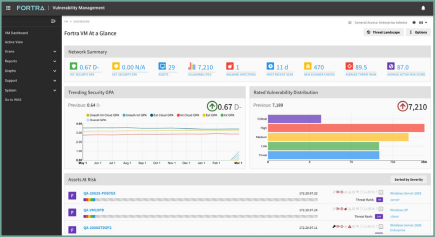
Fortra Vulnerability Management — Using Fortra VM, organizations can run automated scans with proprietary technology and gain visibility into their environment. Using the latest release, organizations can scan remotely, and immediately report malicious activity to third parties for remediation.
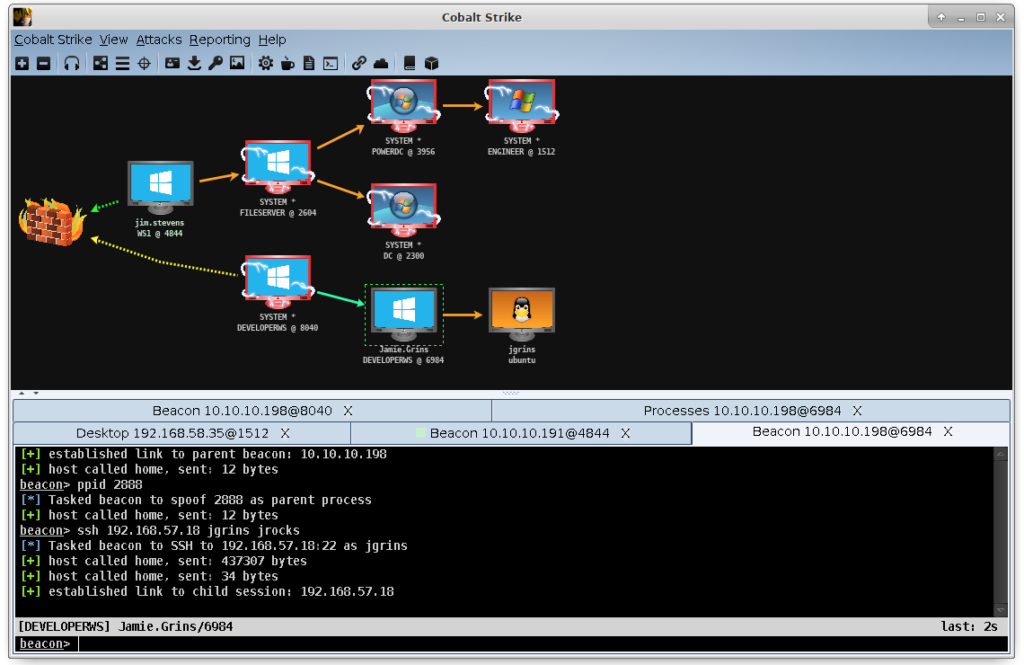
Fortra’s Cobalt Strike (Red Teaming) —Fortra’s Cobalt Strike puts your people and your processes to the test with adversary simulations and red team operations that mimic the moves of advanced threat actors. This stress tests your incident response capabilities and the ability of your SOC to perform under fire, just like in a real-world attack scenario.
Conclusion
If there is poor cybersecurity, all the Ops managers and IT administrators in the world won’t be enough to keep your systems online. Upskilling and reskilling your current workforce with critical offensive security skills lets employees wear multiple hats, defend your enterprise, and be where they’re needed the most. Rather than stretching your current security resources thin playing the reactive security game, offensive security measures like habitual vulnerability scans, pen tests, and red team engagements will ensure your SOC is used most wisely and can defend and respond to attacks on their own terms — not the attacker’s. By upskilling and reskilling the workers who know your organization best, you can support your team with additional hands and stay agile in a shifting threat environment.
Get to know our Bundles and Suites
Explore Cobalt Strike’s full range of bundles and suites designed to support every stage of adversary simulation. Compare options built for different team sizes and use cases to find the right fit for your red team operations.